
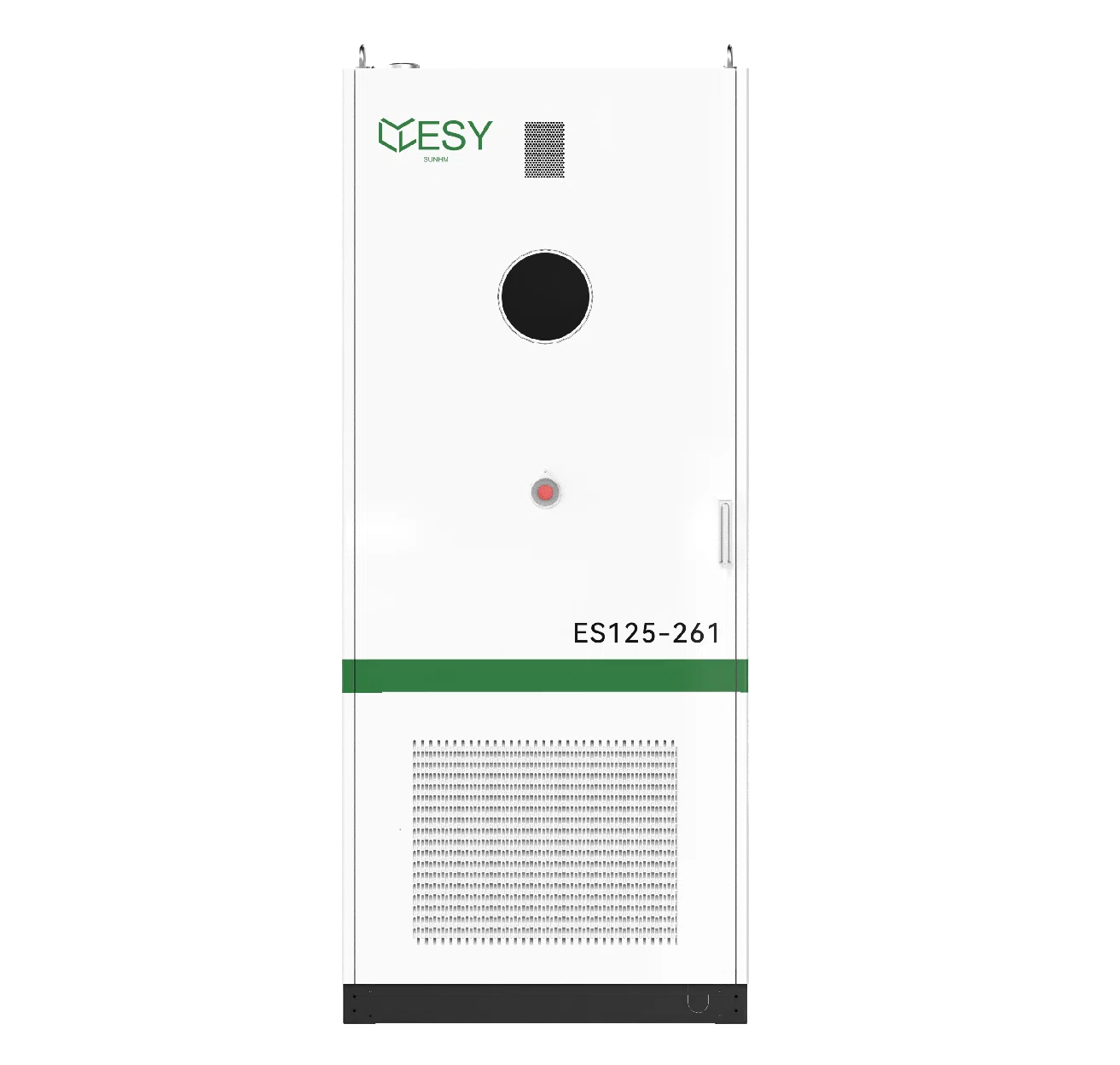
125kW commercial battery systems for retrofit projects should be compared through power output, usable capacity, installation requirements, efficiency, safety features, and long-term operating performance. A typical 125kW system paired with 250–300kWh battery capacity can support peak demand management, renewable energy shifting, and backup applications. The best retrofit option is the system that matches existing electrical infrastructure while maintaining high efficiency and reliable operation.
Commercial battery retrofits are becoming more common as businesses look for ways to manage electricity costs, support renewable energy, and improve power reliability. A 125kW battery system is often selected for medium-sized commercial buildings because it fits many existing distribution systems without requiring large-scale electrical reconstruction.
A typical configuration includes a battery cabinet, bidirectional inverter, battery management system (BMS), energy management system (EMS), HVAC equipment, and safety protection devices. Many commercial installations between 2020 and 2026 have used lithium iron phosphate (LFP) batteries because of their long cycle life and improved thermal stability.
| Parameter | Typical Range |
|---|---|
| Rated Power | 125kW |
| Battery Capacity | 250–300kWh commonly used |
| Battery Chemistry | LFP |
| Round-trip Efficiency | 85–92% |
| Cycle Life | 4,000–8,000 cycles |
| Operating Temperature | -20°C to 50°C |
| Response Time | Less than 100 milliseconds |
The application purpose affects the preferred battery design. A building using storage for demand charge reduction may require frequent daily cycling, while a facility using storage for emergency backup may prioritize standby reliability and capacity availability.
A 125kW system operating with a 261kWh battery capacity can provide approximately 2 hours of full-power discharge, while a lower power operating mode can extend service duration for longer energy management periods.
Capacity selection must also consider degradation. Most LFP commercial batteries are designed to maintain around 70–80% of their original capacity after several thousand cycles under controlled conditions. Temperature control, depth of discharge, and charging speed influence how quickly available capacity changes over time.
The physical design of the battery cabinet affects retrofit installation difficulty. Existing buildings often have limited electrical rooms, restricted outdoor areas, and specific fire protection requirements. Compact cabinet designs can reduce construction changes and simplify installation.
For projects requiring modular expansion, a scalable 261kWh commercial battery cabinet can provide a practical approach by allowing additional storage capacity to be added according to future energy requirements.
Electrical compatibility is one of the first areas evaluated during a retrofit project. A 125kW three-phase inverter connected to a 480V system requires approximately 150A continuous current output.
| Electrical Item | Typical Consideration |
|---|---|
| Transformer Rating | Must support additional power flow |
| Switchgear | Requires suitable current rating |
| Protection Devices | Need coordination with inverter operation |
| Grid Connection | Must meet local utility requirements |
Many commercial buildings installed electrical equipment years before battery storage became common. As a result, engineers need to review existing feeders, protection settings, and available connection points before installation.
The inverter design influences how well the battery interacts with the building power system. Modern commercial inverters commonly support functions such as peak shaving, load shifting, grid support, and renewable energy integration.
Power conversion efficiency is usually between 95% and 98% for commercial battery inverters. A small efficiency difference can affect annual operating performance. For example, a system processing 100MWh of energy per year with 96% conversion efficiency loses about 4MWh during conversion, while a 98% system loses about 2MWh.
In retrofit projects, inverter compatibility often determines whether the battery can operate smoothly with existing electrical equipment.
Thermal management is another important comparison area. Battery cells perform best within a controlled temperature range, commonly around 20°C to 30°C. Higher temperatures can accelerate capacity reduction, while very low temperatures may limit charging performance.
Commercial battery systems usually use three thermal management methods:
| Cooling Method | Typical Use |
|---|---|
| Air Cooling | Smaller commercial installations |
| Forced Air Cooling | Medium-size battery cabinets |
| Liquid Cooling | Higher capacity systems |
Liquid cooling can provide more consistent cell temperatures, especially when multiple battery modules operate together. However, it adds pumps, coolant components, and additional maintenance requirements.
Safety design has become more detailed in commercial storage projects after 2020. Battery systems are commonly evaluated through standards such as UL 9540, UL 9540A testing, and NFPA 855 requirements in North American installations.
Safety features usually include:
-
Cell temperature monitoring
-
Over-voltage protection
-
Over-current protection
-
Smoke and heat detection
-
Emergency shutdown functions
The battery management system collects thousands of data points during operation. It monitors cell voltage differences, temperature variation, state of charge, and system alarms. Better monitoring helps maintenance teams identify abnormal conditions earlier.
Software integration also affects system performance. Many commercial battery systems connect with building management systems, solar inverters, utility programs, and energy monitoring platforms.
A modern EMS can adjust charging and discharging schedules according to:
| Data Source | Application |
|---|---|
| Building Load Data | Demand management |
| Solar Generation Data | Renewable energy use |
| Utility Tariffs | Electricity cost control |
| Weather Information | Renewable output planning |
For example, a commercial building with solar generation during daytime hours may charge batteries when solar output is high and discharge during evening demand periods. This operating method can increase renewable energy usage and reduce grid consumption during expensive hours.
Maintenance requirements should also be included when comparing systems. Battery cabinets with modular components can simplify service because individual modules or power units can be inspected without replacing the entire system.
A 10-year operating period is commonly used for commercial storage financial analysis. During this period, factors such as efficiency loss, replacement schedules, software updates, and service availability influence total ownership cost.
| Cost Category | Project Influence |
|---|---|
| Battery Equipment | Initial investment |
| Installation Work | Depends on site conditions |
| Electrical Upgrades | Existing infrastructure condition |
| Maintenance | Long-term operating expense |
| Software Services | System optimization capability |
Retrofit battery selection is different from selecting a battery for a new building. Existing electrical layouts, available installation space, utility requirements, and operating goals all affect the final system design.
A 125kW commercial battery system can provide reliable performance when the battery capacity, inverter rating, thermal design, and control platform are properly matched. With commercial storage installations increasing across office buildings, retail facilities, warehouses, and small industrial sites after 2025, systems that support flexible configuration and future expansion are becoming more common.